Cabinet called for more effective international action to halt settler violence, which targeted 24 Palestinian villages within just four days
Urged guarantor states of the Gaza ceasefire to uphold their responsibilities in light of ongoing Israeli violations
Directed the Ministry of Education to develop a sustainable, integrated distance learning system and address learning loss
Reaffirmed that student safety remains the top priority
Approved the formation of a National Team for Food Safety
Endorsed measures to accelerate Beit Ola and Attara power stations to strengthen energy security
Reviewed amendments to the regulatory framework governing nurseries
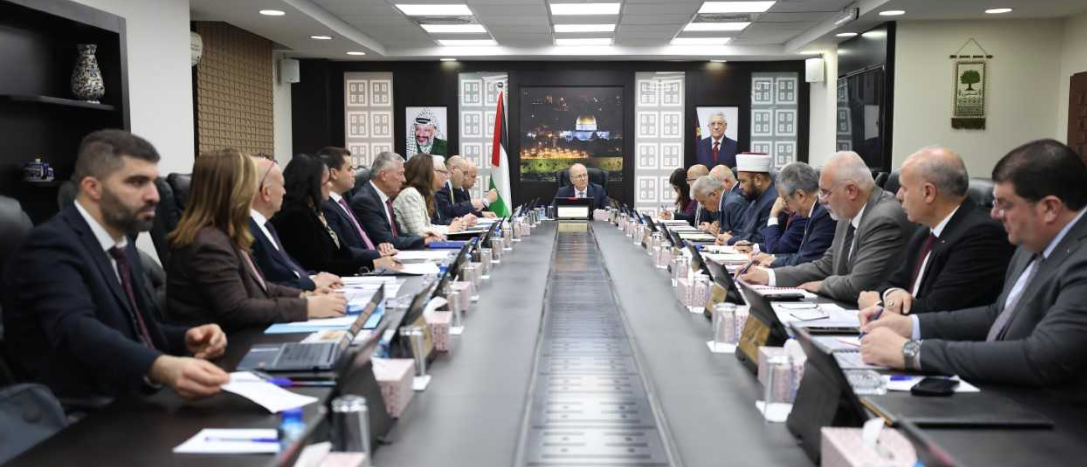
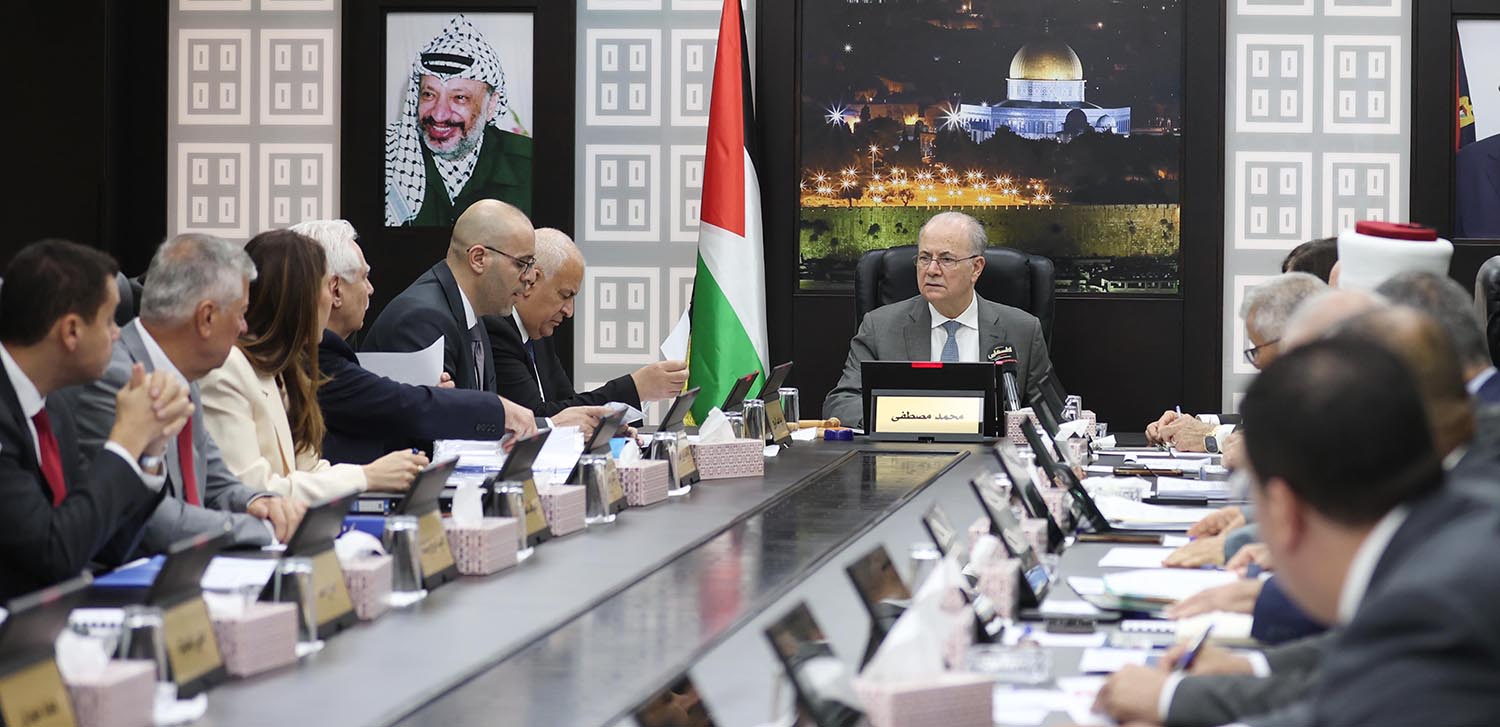
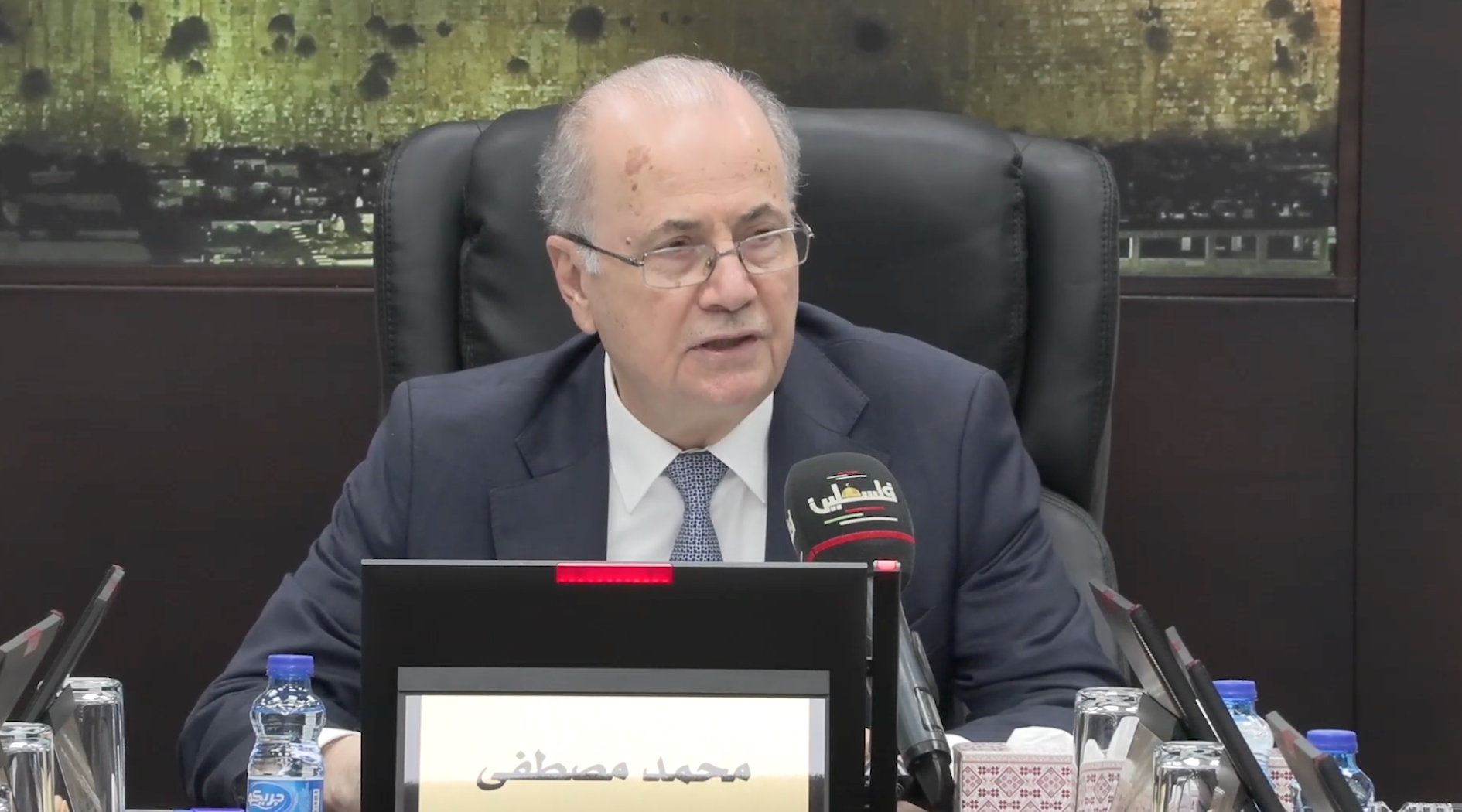
RAMALLAH, March 24, 2026 | Government Communication Center — Prime Minister Dr. Mohammad Mustafa opened, on Tuesday, the weekly Cabinet session by briefing members on ongoing political and diplomatic efforts aimed at mobilizing greater international pressure to halt the escalating crimes of the Israeli occupation and terrorist settler militias.
Over the past four days alone, attacks targeted 24 Palestinian villages across 11 waves of assaults, resulting in 23 injuries, damage to 17 homes and structures due to arson and vandalism, and destruction affecting 26 vehicles and a car scrapyard. These attacks were concentrated in the governorates of Nablus, Ramallah, Hebron, and Bethlehem.
In this context, the Cabinet renewed its call on the international community to take immediate and concrete action to stop these violations and hold perpetrators accountable, directing the Ministry of Foreign Affairs and all diplomatic missions to intensify engagement with countries and international organizations.
The Cabinet also warned of the continued Israeli occupation’s grave violations in the Gaza Strip, including ongoing bombardment and massacres, as well as documented abuses and arrests against patients and travelers at the Rafah border crossing, alongside worsening indicators of an undeclared famine. It called on the international community—particularly guarantor states of the ceasefire agreement—to assume their responsibilities and take urgent action to halt these violations and hold the Israel occupation accountable for its escalating breaches in recent weeks.
It further discussed the escalating violence against women and children, as well as ongoing efforts to address it, particularly crimes committed by the occupation and the need to document and expose them internationally, alongside addressing societal violations. The most recent incident—the killing of a woman by her husband—underscores the urgent need to strengthen legal protection frameworks and raise awareness of protection measures for vulnerable groups, especially women and children.
Additionally, the Cabinet emphasized the importance of expanding access to government-run protection and counseling centers, in addition to legal and psychosocial support services, and directed the intensification of social and economic empowerment programs for these groups, in a manner that enhances their protection and resilience.
In light of the ongoing threats posed by falling debris and projectile fragments, the Cabinet reaffirmed that student safety takes precedence over all other considerations, stressing the need for strict adherence to preventive measures and official safety guidelines.
In this context, it instructed the Ministry of Education and Higher Education to further develop the distance learning system, integrate it sustainably into the formal education process, and take the necessary measures to address learning loss.
The Cabinet approved the formation of a National Team for Food Safety to enhance inter-ministerial coordination, develop policies, update legislation, and strengthen inspection and monitoring systems, ensuring an integrated approach to food safety governance.
It also approved the Energy Authority’s request to approve the costs of supplementary works for connecting the Beit Ola power station to the Hebron electricity network and endorsed procedures for procuring services to obtain construction permits for the Attara power station, as part of accelerating the Government’s plan and energy security initiative in Palestine.
The Cabinet reviewed, in second reading, the schedule of telecommunications licensing and service fees, and in first reading, draft amendments to the regulatory framework governing nurseries and their implementing regulations for 2026, aimed at strengthening oversight and ensuring safe environments for early childhood care.
Furthermore, the Cabinet adopted the recommendation of the Board of the National Commission for Technical and Vocational Education and Training to appoint an Executive Director following a competitive process involving twenty candidates, while emphasizing the need to accelerate the development of a comprehensive national strategy for vocational and technical education.
The Cabinet also approved an agreement to strengthen the Palestinian national statistical system, supported by the European Union, aimed at enhancing data infrastructure, advancing statistical capabilities, and integrating data science and artificial intelligence within the Palestinian Central Bureau of Statistics.




.jpg-5b36b903-6fb6-4503-b9e0-49d62aa0f202.jpg)
.jpg-68e1b2d5-e076-47b2-8c98-2faf554dada3.jpg)
