
The Palestinian Prime Minister, Dr. Mohammad Shtayyeh expressed hope that next year will witness a breakthrough in the financial crisis and Israeli systematic measures against Palestinians.
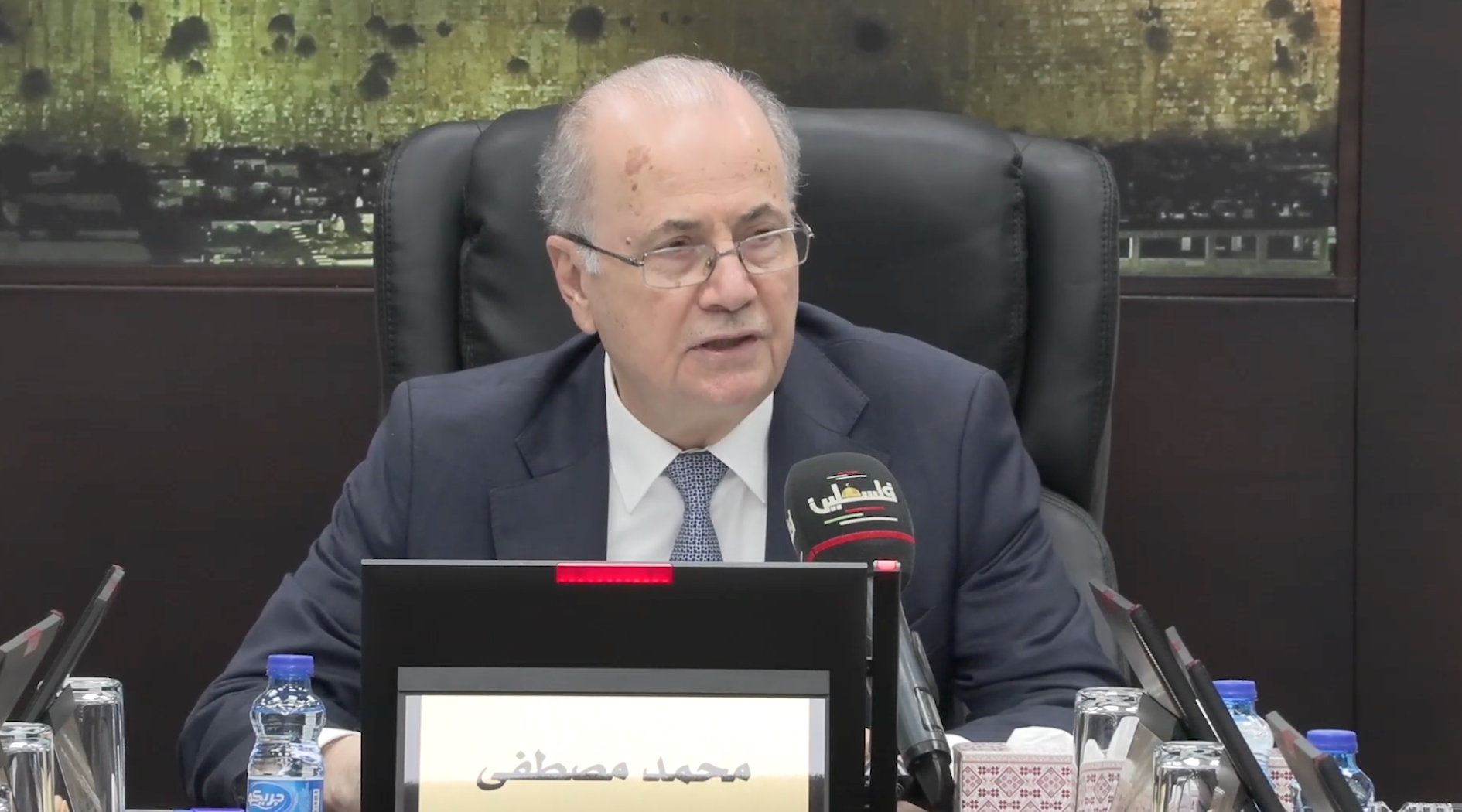
Speaking at the outset of the cabinet weekly meeting held in Ramallah, the Prime Minister stressed that year 2022 was painful, during which the financial crisis has gravely hurt the Palestinian economy and the public sector, as well as to Israeli soldiers killing 220 Palestinians, more than 9000 were wounded, 6,500 were detained, 832 buildings were demolished and 13,000 olive trees were uprooted.
PM added: “We faced a complex crises, from which our national economy and financial budgets suffered due to the significant decline in international aid, the continuation of Israeli deductions, the piracy of our money, the repercussions of the coronavirus, and the war in Ukraine.”
Dr. Shtayyeh elaborated: “we maintained a high economic growth rate, compared to other countries, as we achieved a growth of 3.6%, the level of investment increased by 15.3%, and the industry’s contribution to the gross domestic product increased to 11%. While the share of agriculture rose to 6.2%, exports increased by 7.3% and imports by 16.9%.” Prime Minister also pointed out that unemployment decreased from 19% to 12.6 in the West Bank during his government, yet it remained 46.6% in the Gaza Strip due to 16 years of tight Israeli blockade.
Dr. Shtayyeh emphasized that measures have been taken to tackle inflation, noting that despite the improvement in economic performance, the budget deficit remained due to the decline in international aid and the financial cuts that Israel makes from the Palestinian tax revenues, explaining that his government has rationalized expenditures to counteract this deficit. In this regard, the Prime Minister thanked the public employees for their understanding after receiving 20 percent cuts in their salaries for more than a year, which ultimately helps in facing the government’s financial crisis.
Prime Minister expressed hope that the flow of international aid, especially from Arab countries, will be restored during the next year to overcome this crisis. He also pointed out that the private sector is playing a crucial role in investing and creating more job opportunities. He further stressed that the banks are currently in a state of stability, which indicates the strength of the Palestinian banking sector in face of the current financial crisis. PM added that the government is working towards making fundamental reforms in health services, education, and laws governing the economy, and will confront the occupation measures that might limit our control over national resources.
The cabinet concluded this session by holding an extensive discussion about the challenges facing the Palestinian National Project, in light of all complexities in the political horizon and the growing manifestations of extremism and racism in Israel’s new government headed by Benjamin Netanyahu.




.jpg-5b36b903-6fb6-4503-b9e0-49d62aa0f202.jpg)
.jpg-68e1b2d5-e076-47b2-8c98-2faf554dada3.jpg)
